Wattled Crane
Scientific Name: Bugeranus carunculatus
Status: Critically Endangered
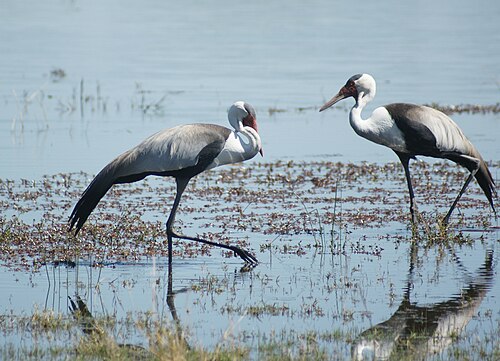
Quick ID: Large grey crane with a white neck and distinctive red wattles hanging from the throat.
Where to Find It: Wetlands, marshes and wet grasslands.
When to See It: Year-round, although sightings are uncommon.
About This Species
The Wattled Crane is South Africa's rarest crane and one of Africa's most threatened waterbirds. Standing over 1.5 metres tall, it is the largest crane in the country and is easily recognised by its elegant grey plumage, white neck and distinctive red wattles. The KwaZulu-Natal Midlands supports one of the most important remaining populations of this species, making the Dargle area a key landscape for its conservation.Wattled Cranes depend on healthy wetlands and marshy grasslands for feeding, nesting and raising their young. They are highly sensitive to habitat disturbance, changes in water levels and the loss of wetland habitat. Because of these specialised requirements, their presence is widely regarded as an indicator of wetland health and ecological integrity. Protecting wetlands throughout the Dargle helps safeguard not only this remarkable bird, but the many other species that rely on these ecosystems.

Wattled Crane
Scientific Name: Bugeranus carunculatus
Status: Critically Endangered
Quick ID: Large grey crane with a white neck and distinctive red wattles hanging from the throat.
Where to Find It: Wetlands, marshes and wet grasslands.
When to See It: Year-round, although sightings are uncommon.
About This Species
The Wattled Crane is South Africa's rarest crane and one of Africa's most threatened waterbirds. Standing over 1.5 metres tall, it is the largest crane in the country and is easily recognised by its elegant grey plumage, white neck and distinctive red wattles. The KwaZulu-Natal Midlands supports one of the most important remaining populations of this species, making the Dargle area a key landscape for its conservation.Wattled Cranes depend on healthy wetlands and marshy grasslands for feeding, nesting and raising their young. They are highly sensitive to habitat disturbance, changes in water levels and the loss of wetland habitat. Because of these specialised requirements, their presence is widely regarded as an indicator of wetland health and ecological integrity. Protecting wetlands throughout the Dargle helps safeguard not only this remarkable bird, but the many other species that rely on these ecosystems.
South Africa's rarest crane and a flagship species for wetland conservation.
Seen this species in the wild?

Help us document local biodiversity.
If you spot this species in The Dargle, tag the Conservancy (@dargle.kzn) and share your sighting online.
Explore Dargle
- The Conservancy
- The Dargle
- Flora & Fauna
- Resources
Get Involved
- Become a Member
- Support Dargle
- Upcoming Events
- Contact Us
Resources & Info
- Reports
- Environmental Causes
- Educational Material
- Constitution

Dargle Conservancy | Registered NPO No. 054-508
A community working to protect the Dargle’s natural environment.
Privacy Policy | Disclaimer