Samango Monkey
Scientific Name: Cercopithecus mitis
Status: : Endangered (subspecies)
Quick ID: Medium-sized monkey with grey fur, dark face, and long tail
Where to Find It: Mistbelt forests
When to See It: Year-round
About This Species
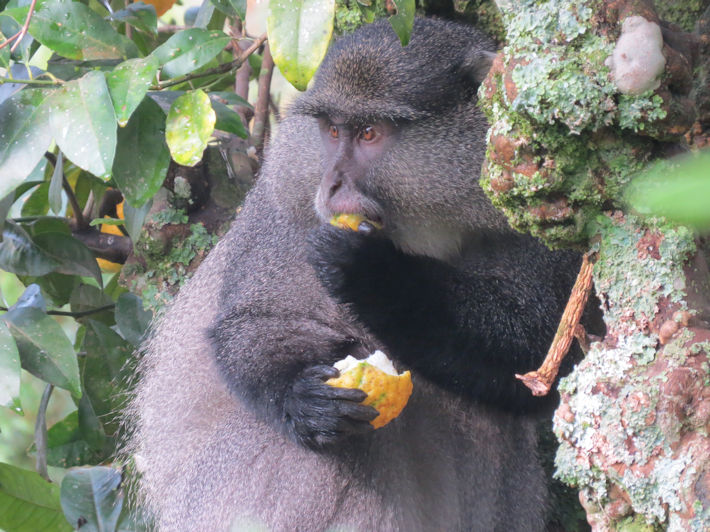
The Samango Monkey is South Africa's only exclusively forest-dwelling monkey and one of the most important indicators of healthy indigenous forest ecosystems. In the Dargle, the Endangered subspecies occurs in rare Afromontane mistbelt forests, a habitat that covers less than 1% of South Africa and is increasingly fragmented. Living high in the canopy, Samangos feed on fruit, leaves, seeds, flowers, fungi and insects, moving through the forest in family groups that defend territories of around 17 hectares. They communicate using a range of distinctive clicks, booms and growls, and their continued presence reflects the health, diversity and connectivity of local forests.

Samango Monkey
Scientific Name: Cercopithecus mitis
Status: : Endangered (subspecies)
Quick ID: Medium-sized monkey with grey fur, dark face, and long tail
Where to Find It: Mistbelt forests
When to See It: Year-round
About This Species
The Samango Monkey is South Africa's only exclusively forest-dwelling monkey and one of the most important indicators of healthy indigenous forest ecosystems. In the Dargle, the Endangered subspecies occurs in rare Afromontane mistbelt forests, a habitat that covers less than 1% of South Africa and is increasingly fragmented. Living high in the canopy, Samangos feed on fruit, leaves, seeds, flowers, fungi and insects, moving through the forest in family groups that defend territories of around 17 hectares. They communicate using a range of distinctive clicks, booms and growls, and their continued presence reflects the health, diversity and connectivity of local forests.
The Samango monkey is South Africa’s only exclusively forest-dwelling monkey. In the Dargle, it occurs in rare Afromontane forests, which make up less than 1% of the country’s landscape. These monkeys live high in the forest canopy, feeding on fruit, leaves, insects, and seeds.
Seen this species in the wild?

Help us document local biodiversity.
If you spot this species in The Dargle, tag the Conservancy (@dargle.kzn) and share your sighting online.