
Natal Leaf-folding Frog
Scientific Name: Afrixalus spinifrons intermedius
Status: Least Concern
Quick ID: Small yellow frog with tiny black spines on its skin.
Where to Find It: Farm dams, ponds, wetlands and marshy areas above 1,000 metres.
When to See It: Rainy season (September to March).
About This Species
The Samango Monkey is South Africa's only exclusively forest-dwelling monkey and one of the most important indicators of healthy indigenous forest ecosystems. In the Dargle, the Endangered subspecies occurs in rare Afromontane mistbelt forests, a habitat that covers less than 1% of South Africa and is increasingly fragmented. Living high in the canopy, Samangos feed on fruit, leaves, seeds, flowers, fungi and insects, moving through the forest in family groups that defend territories of around 17 hectares. They communicate using a range of distinctive clicks, booms and growls, and their continued presence reflects the health, diversity and connectivity of local forests.

Natal Leaf-folding Frog
Scientific Name: Afrixalus spinifrons intermedius
Status: Least Concern
Quick ID: Small yellow frog with tiny black spines on its skin.
Where to Find It: Farm dams, ponds, wetlands and marshy areas above 1,000 metres.
When to See It: Rainy season (September to March).
About This Species
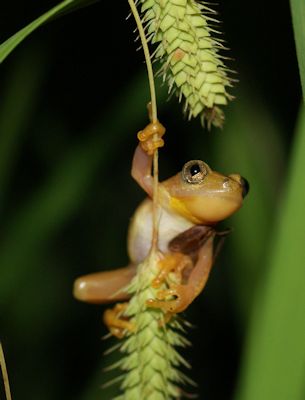
The Natal Leaf-folding Frog is a small but fascinating wetland species found throughout the KwaZulu-Natal Midlands. Reaching only around 25 mm in length, it is recognised by its yellow colouring and the fine black spines that cover its skin. It is commonly encountered around farm dams, ponds and seasonal wetlands where suitable breeding habitat is available.The species is best known for its remarkable breeding behaviour. Females lay their eggs along the edge of a leaf and the male then folds and seals the leaf using a sticky secretion, creating a protective tube-like nursery for the developing eggs. This unusual strategy gives the species its common name and makes it one of the more intriguing frogs found in the Midlands.
A tiny frog with one of the most remarkable breeding strategies in the animal kingdom.
Seen this species in the wild?
Help us document local biodiversity.
If you spot this species in The Dargle, tag the Conservancy (@dargle.kzn) and share your sighting online.