
Long-toed Tree Frog
Scientific Name: Leptopelis xenodactylus
Status: Endangered
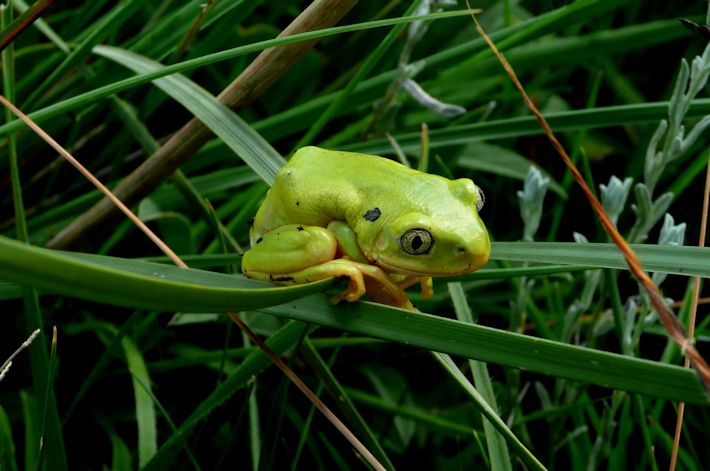
Quick ID: Bright green frog with unusually long toes and a distinctive call.
Where to Find It: Tussocky grassland wetlands and damp wetland margins.
When to See It: Rainy season, particularly during misty or wet conditions.

About This Species
The Samango Monkey is South Africa's only exclusively forest-dwelling monkey and one of the most important indicators of healthy indigenous forest ecosystems. In the Dargle, the Endangered subspecies occurs in rare Afromontane mistbelt forests, a habitat that covers less than 1% of South Africa and is increasingly fragmented. Living high in the canopy, Samangos feed on fruit, leaves, seeds, flowers, fungi and insects, moving through the forest in family groups that defend territories of around 17 hectares. They communicate using a range of distinctive clicks, booms and growls, and their continued presence reflects the health, diversity and connectivity of local forests.
Long-toed Tree Frog
Scientific Name: Leptopelis xenodactylus
Status: Endangered
Quick ID: Bright green frog with unusually long toes and a distinctive call.
Where to Find It: Tussocky grassland wetlands and damp wetland margins.
When to See It: Rainy season, particularly during misty or wet conditions.
About This Species
The Long-toed Tree Frog is one of the Midlands' most distinctive amphibians and an important indicator of wetland health. Despite its name, it is the least tree-dwelling member of its genus and spends most of its life among the grasses and sedges of wetlands rather than in trees. This bright green frog can grow to around 60 mm in length and is recognised by its unusually long toes and striking colouration.Often heard before it is seen, its call has been compared to the sound of a baby crocodile and is most commonly heard during misty or rainy weather. The species occurs within a relatively small range in KwaZulu-Natal and is highly sensitive to habitat disturbance, water pollution and wetland degradation. Protecting the Dargle's wetlands is essential for the survival of this Endangered species and the many other animals that depend on these habitats.
A rare wetland specialist whose presence signals healthy grassland wetlands.
Seen this species in the wild?

Help us document local biodiversity.
If you spot this species in The Dargle, tag the Conservancy (@dargle.kzn) and share your sighting online.