
Blue Crane
Scientific Name: Anthropoides paradiseus
Status: Vulnerable
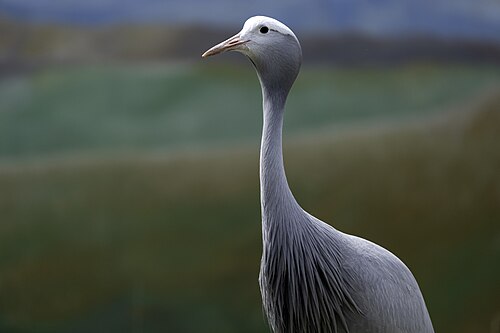
Quick ID: Elegant pale blue-grey crane with long trailing wing feathers.
Where to Find It: Open grasslands, pastures and agricultural fields.
When to See It: Year-round
About This Species
The Blue Crane is South Africa's national bird and one of the most distinctive species found in the Midlands. Known for its elegant blue-grey plumage and long trailing wing feathers, it is commonly seen moving through open grasslands, grazing lands and agricultural fields. Pairs and family groups are often observed feeding together, contributing to the character of the region's rural landscapes.Blue Cranes have adapted to certain farming environments, but they still rely on extensive open habitats for feeding, breeding and movement. Habitat loss, collisions with powerlines and disturbance during the breeding season remain significant threats across their range. Their presence in the Dargle reflects the importance of maintaining large, connected grassland landscapes where wildlife and agriculture can coexist successfully.

Blue Crane
Scientific Name: Anthropoides paradiseus
Status: Vulnerable
Quick ID: Elegant pale blue-grey crane with long trailing wing feathers.
Where to Find It: Open grasslands, pastures and agricultural fields.
When to See It: Year-round
About This Species
The Blue Crane is South Africa's national bird and one of the most distinctive species found in the Midlands. Known for its elegant blue-grey plumage and long trailing wing feathers, it is commonly seen moving through open grasslands, grazing lands and agricultural fields. Pairs and family groups are often observed feeding together, contributing to the character of the region's rural landscapes.Blue Cranes have adapted to certain farming environments, but they still rely on extensive open habitats for feeding, breeding and movement. Habitat loss, collisions with powerlines and disturbance during the breeding season remain significant threats across their range. Their presence in the Dargle reflects the importance of maintaining large, connected grassland landscapes where wildlife and agriculture can coexist successfully.
South Africa's national bird and a graceful resident of the Midlands grasslands.
Seen this species in the wild?

Help us document local biodiversity.
If you spot this species in The Dargle, tag the Conservancy (@dargle.kzn) and share your sighting online.