Bilbo's Rain Frog
Scientific Name: Breviceps bagginsi
Status: Vulnerable
Quick ID: Small, round-bodied frog that spends most of its life underground.
Where to Find It: Moist grasslands in the KwaZulu-Natal Midlands.
When to See It: During and after summer rainfall.
About This Species
Bilbo's Rain Frog is one of the Midlands' most elusive amphibians and is known from only a handful of locations in KwaZulu-Natal. Unlike many frogs, it spends most of its life hidden underground in burrows within natural grassland, emerging only when conditions are wet enough. Its round body, short limbs and secretive lifestyle make sightings relatively uncommon.Following rain, groups of frogs may emerge simultaneously, sometimes gathering in surprisingly large numbers. Although relatively little is known about the species, it is believed to breed underground, with young developing directly within subterranean nests rather than through a free-swimming tadpole stage. Habitat loss and the conversion of natural grassland continue to threaten this unique endemic species, highlighting the importance of conserving the Midlands' remaining grassland habitats.
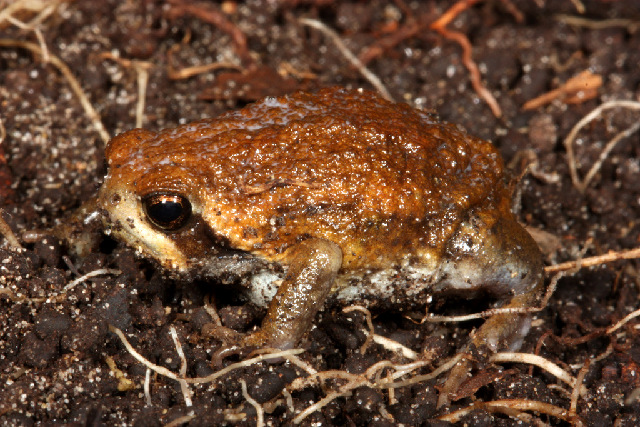

Bilbo's Rain Frog
Scientific Name: Breviceps bagginsi
Status: Vulnerable
Quick ID: Small, round-bodied frog that spends most of its life underground.
Where to Find It: Moist grasslands in the KwaZulu-Natal Midlands.
When to See It: During and after summer rainfall.
About This Species
Bilbo's Rain Frog is one of the Midlands' most elusive amphibians and is known from only a handful of locations in KwaZulu-Natal. Unlike many frogs, it spends most of its life hidden underground in burrows within natural grassland, emerging only when conditions are wet enough. Its round body, short limbs and secretive lifestyle make sightings relatively uncommon.Following rain, groups of frogs may emerge simultaneously, sometimes gathering in surprisingly large numbers. Although relatively little is known about the species, it is believed to breed underground, with young developing directly within subterranean nests rather than through a free-swimming tadpole stage. Habitat loss and the conversion of natural grassland continue to threaten this unique endemic species, highlighting the importance of conserving the Midlands' remaining grassland habitats.
An elusive grassland endemic that spends most of its life hidden underground.
Seen this species in the wild?

Help us document local biodiversity.
If you spot this species in The Dargle, tag the Conservancy (@dargle.kzn) and share your sighting online.