
Midlands Dwarf Chameleon
Scientific Name: Bradypodion thamnobates
Status: Vulnerable
Quick ID: Small chameleon with spiky ridge and colour-changing skin
Where to Find It: Forest edges, gardens, roadside vegetation
When to See It: Spring to summer

About This Species
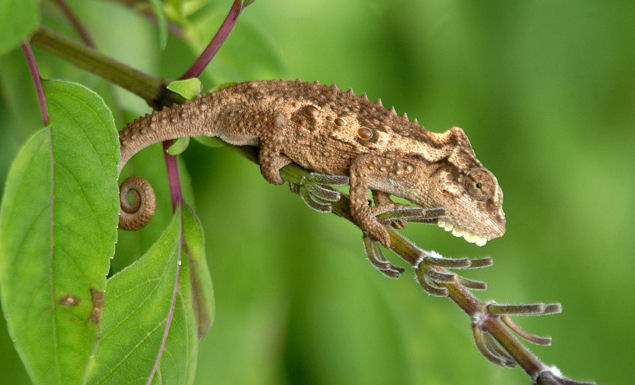
Found nowhere else in the world, the Midlands Dwarf Chameleon is endemic to the KwaZulu-Natal Midlands, where it occurs from the Boston and Dargle area through to Mooi River. Named from the Greek for "slow foot", it moves with a deliberate, swaying gait through shrubs, forest margins and grassland edges. Adults are recognised by their spiny back ridge, knobbly skin and remarkable ability to change colour for camouflage. Unlike many reptiles, dwarf chameleons give birth to live young rather than laying eggs. Habitat loss and collection for the pet trade remain significant threats, making the protection of forests, woodlands and grasslands essential for the species' survival.
Midlands Dwarf Chameleon
Scientific Name: Bradypodion thamnobates
Status: Vulnerable
Quick ID: Small chameleon with spiky ridge and colour-changing skin
Where to Find It: Forest edges, gardens, roadside vegetation
When to See It: Spring to summer
About This Species
Found nowhere else in the world, the Midlands Dwarf Chameleon is endemic to the KwaZulu-Natal Midlands, where it occurs from the Boston and Dargle area through to Mooi River. Named from the Greek for "slow foot", it moves with a deliberate, swaying gait through shrubs, forest margins and grassland edges. Adults are recognised by their spiny back ridge, knobbly skin and remarkable ability to change colour for camouflage. Unlike many reptiles, dwarf chameleons give birth to live young rather than laying eggs. Habitat loss and collection for the pet trade remain significant threats, making the protection of forests, woodlands and grasslands essential for the species' survival.
The Midlands dwarf chameleon is endemic to the KwaZulu-Natal Midlands and found nowhere else in the world. These monkeys live high in the forest canopy, feeding on fruit, leaves, insects, and seeds.
Seen this species in the wild?
Help us document local biodiversity.
If you spot this species in The Dargle, tag the Conservancy (@dargle.kzn) and share your sighting online.